How-To Guides · Small engines
How a Carburetor Works (Simple Animated Explanation)
Lawn mowers, chainsaws, dirt bikes, and older cars all have one. A carburetor. Here's exactly how it works, in plain English, so fixing one makes a lot more sense.
1. Its One Job
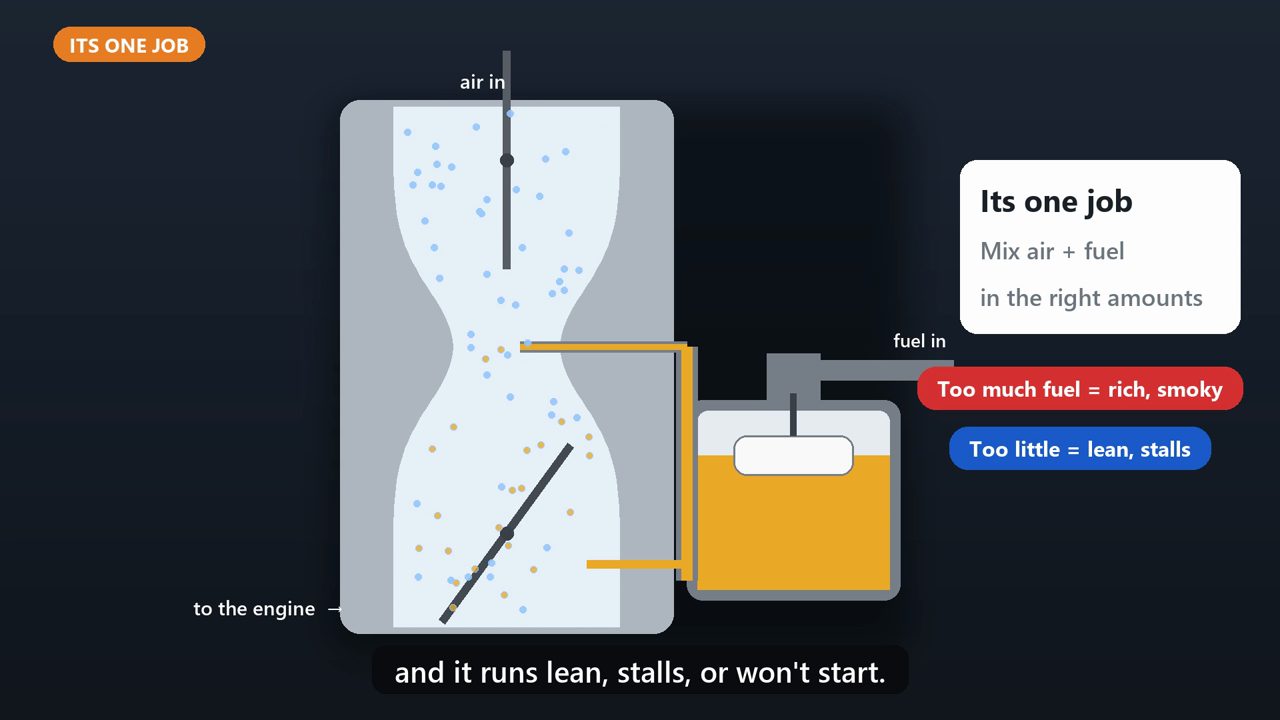
A carburetor has one job. Mix air and fuel in the right amounts, so the engine can burn it. Too much fuel, and it runs rich and smoky. Too little, and it runs lean, stalls, or won't start.
2. The Throttle Plate
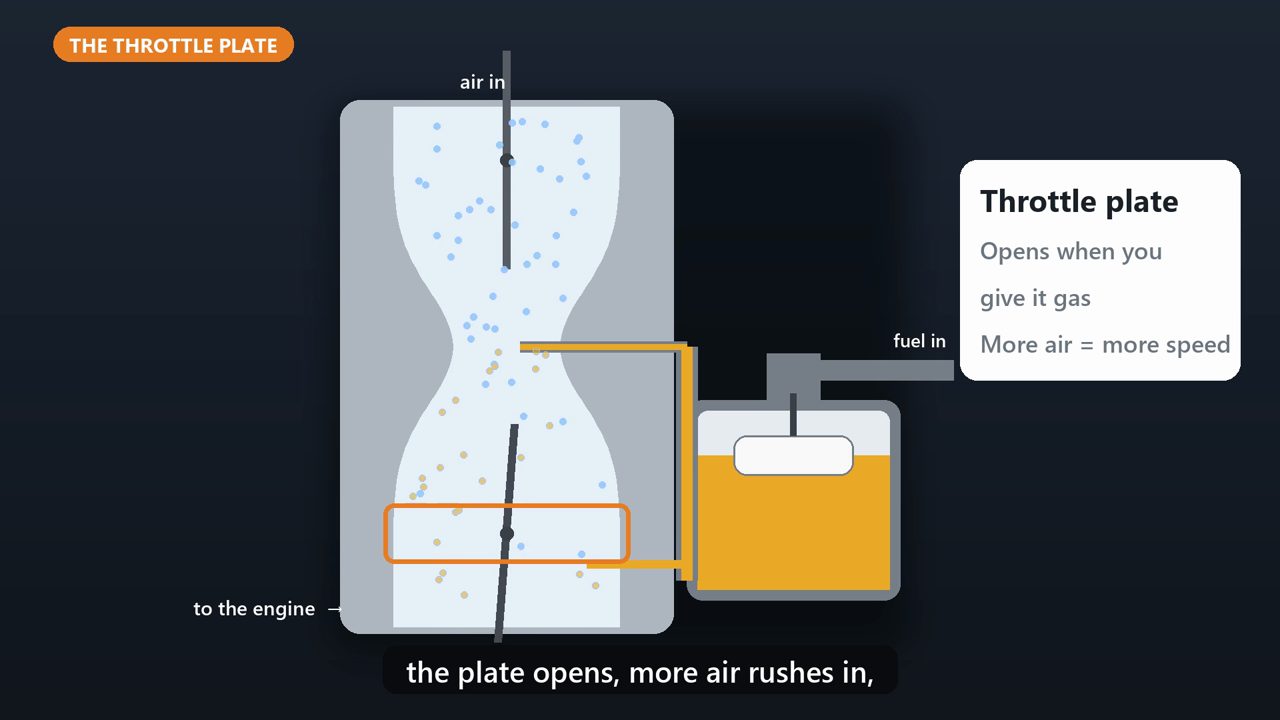
Air flows down through the carburetor, from the air filter to the engine. Near the bottom is a round flap called the throttle plate. When you give it gas, the plate opens, more air rushes in, and the engine speeds up.
3. The Venturi
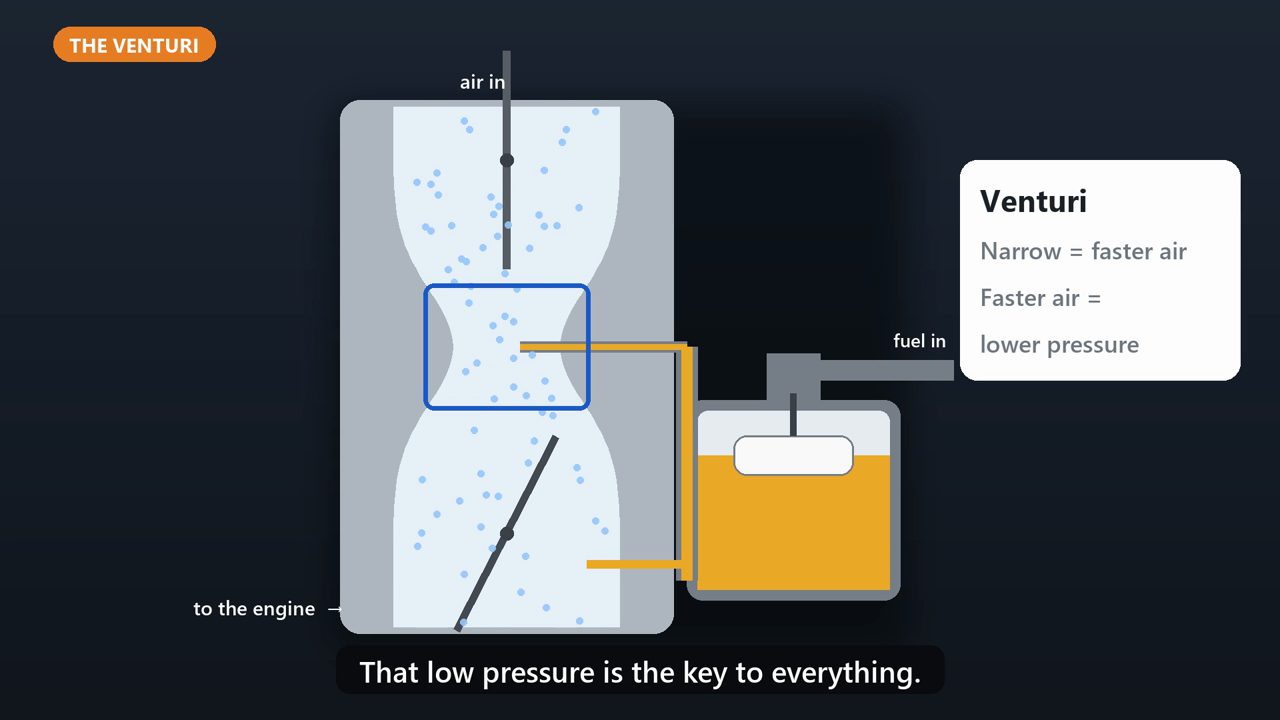
In the middle, the passage gets narrower. This narrow part is called the venturi. Air speeds up as it squeezes through, and fast-moving air has lower pressure. That low pressure is the key to everything.
4. The Jet
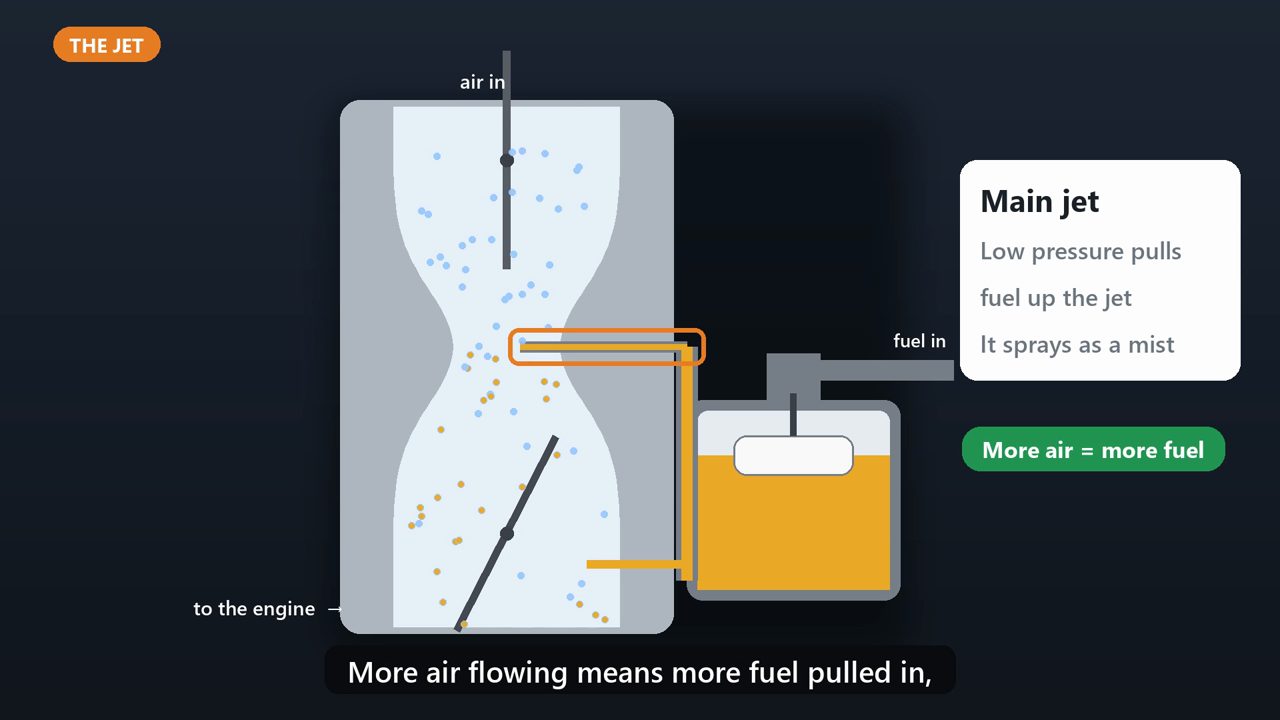
A tiny tube with a precise hole, called the jet, sits right in that narrow spot. The low pressure in the venturi lets the fuel in the bowl get pushed up through the jet, where it sprays into the air as a fine mist. More air flowing means more fuel pulled in, automatically.
5. The Float Bowl
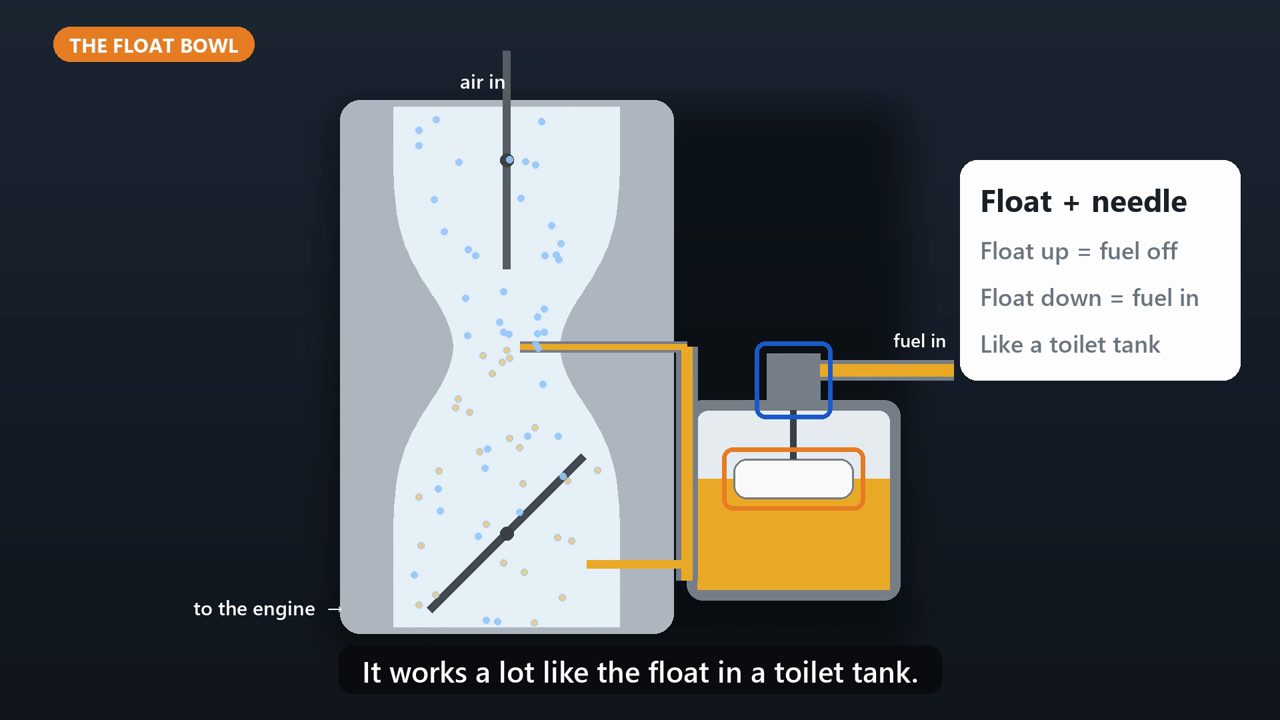
The fuel waits in a small bowl underneath. Inside is a float. As fuel fills the bowl, the float rises and pushes a needle valve closed, shutting off the fuel. As the engine uses fuel, the float drops and lets more in. It works a lot like the float in a toilet tank.
6. The Idle Circuit
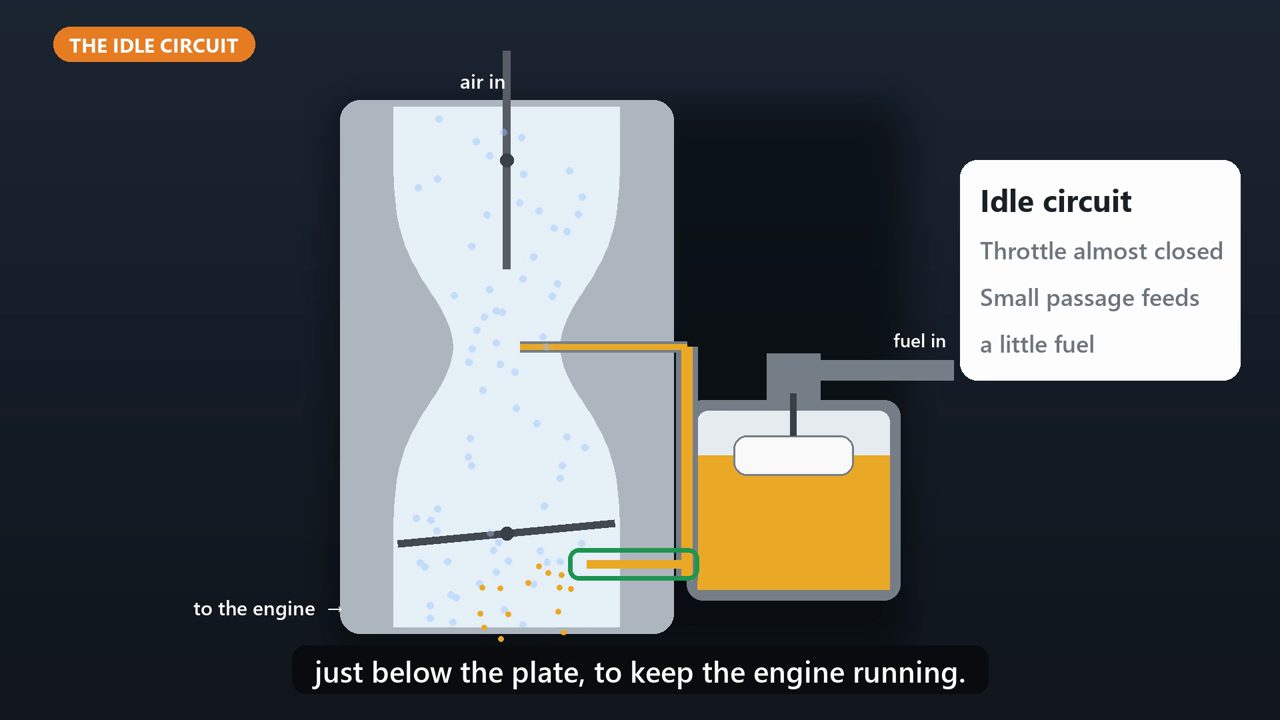
At idle, the throttle plate is almost closed, so there isn't enough air to pull fuel through the main jet. A separate, smaller idle circuit feeds a little fuel in, just below the plate, to keep the engine running.
7. The Choke
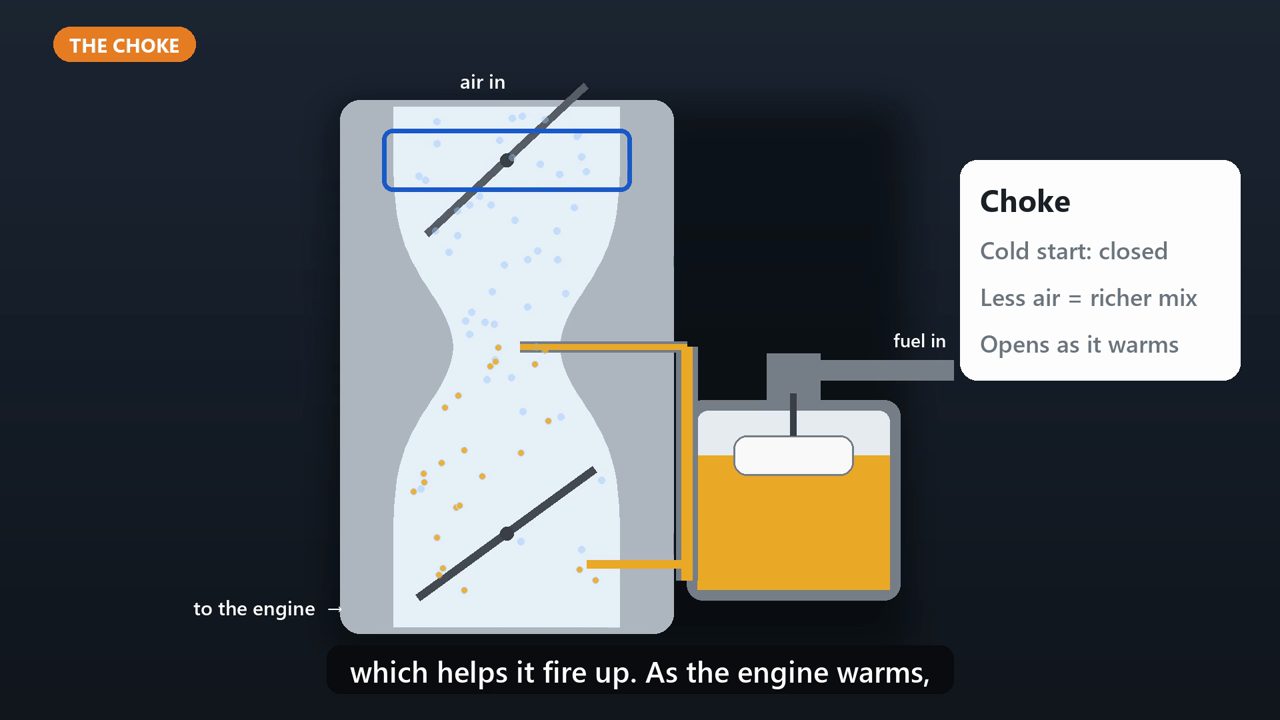
And the choke. It's another flap, at the top. On a cold start, closing the choke cuts the air, so the engine gets an extra rich mix of fuel, which helps it fire up. As the engine warms, the choke opens again.
8. Why Carburetors Act Up
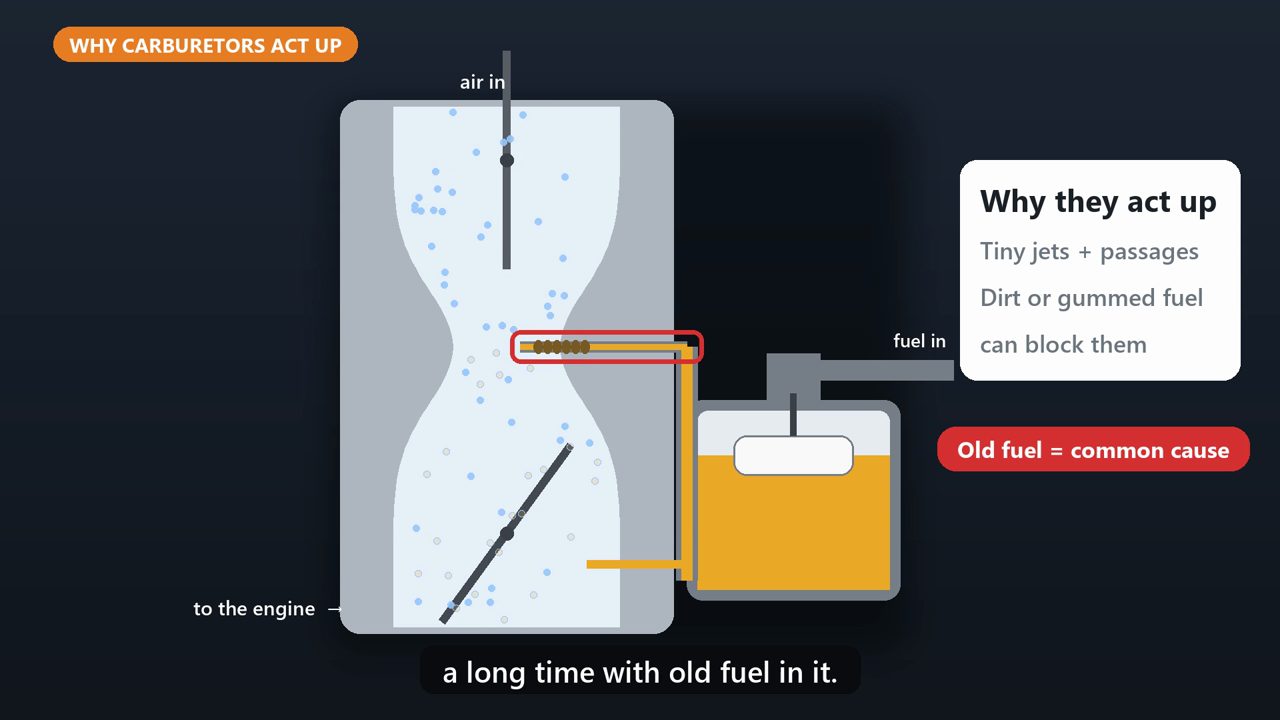
Because the jets and passages are so tiny, a bit of dirt or gummed-up fuel can block them. That's why a carburetor sometimes needs cleaning, especially when an engine sits for a long time with old fuel in it.
Tools that make this easier
Simple Google Sheets + Excel tools from WiscHaven. Buy once, no subscription.




Sources
Checked against the official sources above. Steps can change as apps update - tell us if something looks different: wischavenindustries@gmail.com